
Custom software, built around the way your company works
When work lives across Excel sheets, emails and three programs that do not talk to each other, one more subscription is not enough. We build the software that is missing: CRMs, portals, back offices and marketplaces made for the way you work.
When you really need it
Off-the-shelf software is fine as long as your work looks like everyone else's. Custom software pays off when one of these things happens:
- The same information is retyped by hand from one program to another.
- You pay a subscription for a hundred features and use ten, while the one you need is missing.
- The way you sell or produce is your advantage, and no program allows for it.
- Your data sits on other people's platforms, and you want it to stay yours.
What we build
- Custom CRMs for sales reps and agents, with customer map, visit routes and quotes.
- Internal portals that bring together email, calendar, tasks and clients.
- Management panels on top of e-commerce, simpler than the standard ones.
- Marketplaces with listings, payments, seller verification and moderation.
- Portals for customers and dealers: private areas, orders, documents, QR codes.
- Product configurators connected to the cart.
- Connections to the ERP you already use, so data is entered only once.
Software we have built
All projects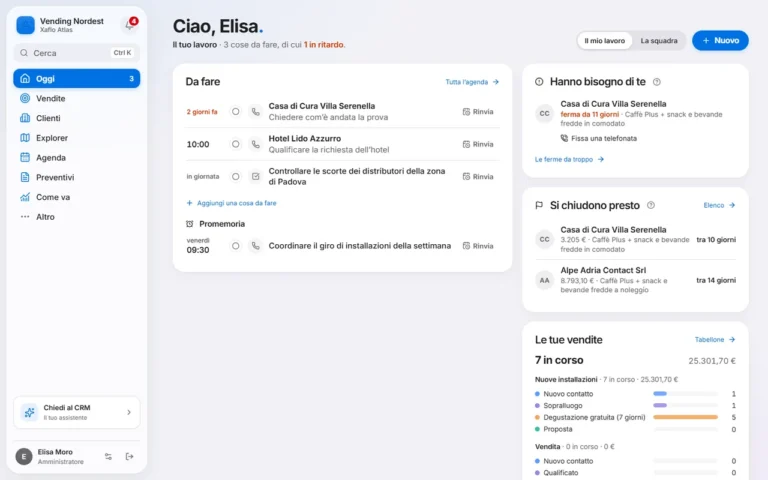 Vending machines, field salesXaflo Atlas How we built Xaflo Atlas: a custom CRM with customer map, visit routes, PDF quotes and an AI assistant, installed on the company's own premises.
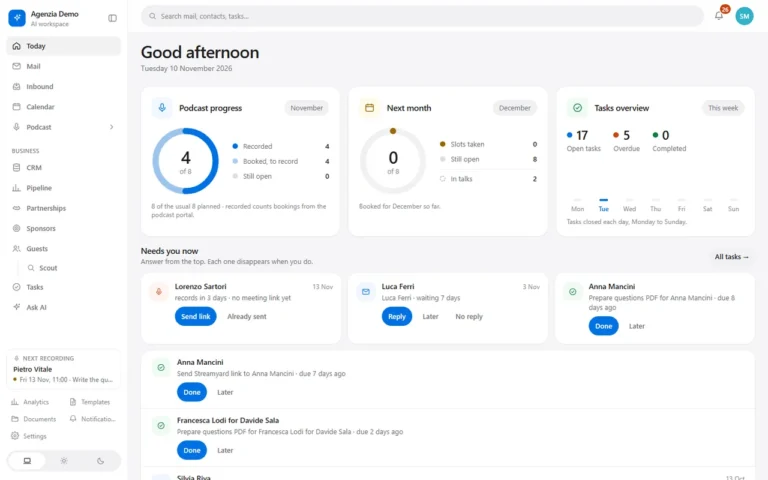 Marketing agency and podcast productionInternal portal with AI A custom internal portal that brings together email, calendar, tasks and clients, with an AI assistant that drafts replies and never sends anything on its own.
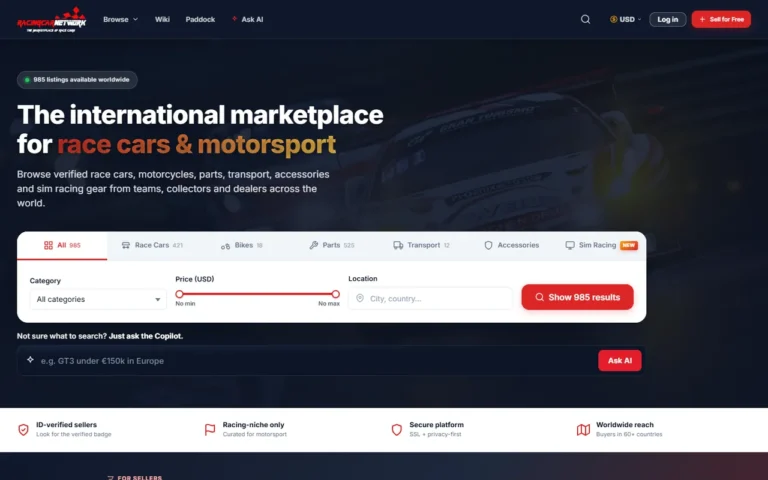 Race cars, bikes, parts, sim racingRacing Car Network How Racing Car Network works: a race car marketplace with listings from more than 60 countries, verified sellers, anti-fraud checks and an AI assistant.
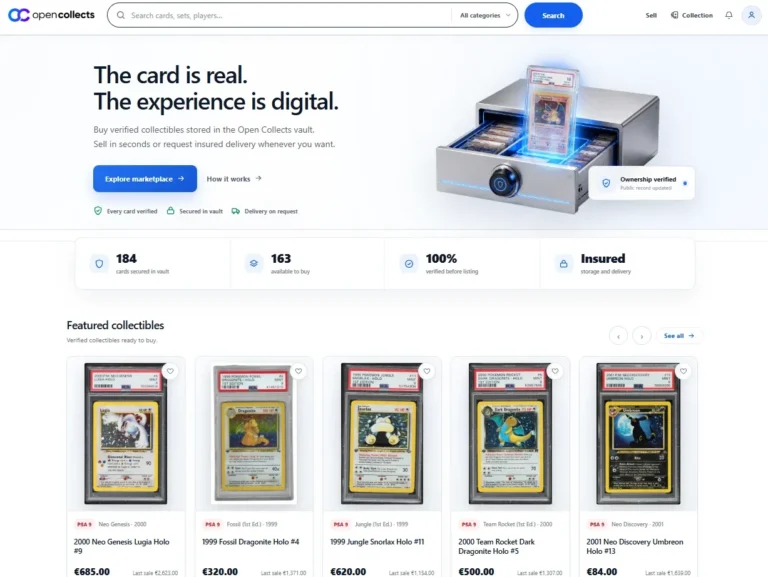 Collectible cardsOpen Collects Open Collects: a marketplace for collectible cards held in a vault, with every change of ownership written on a public ledger.
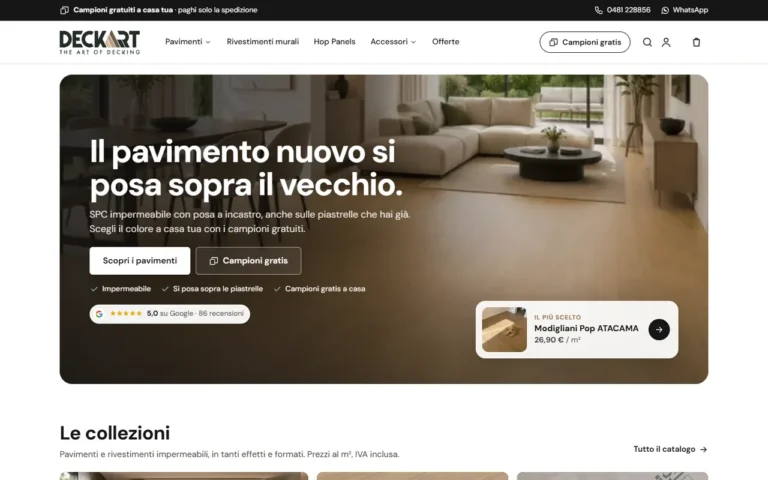 Flooring and wall coveringsDeckart For Deckart we built a flooring e-commerce with a square-metre calculator, free samples and a management panel simpler than WooCommerce.
 Motorcycle accessories and kitsReverso Moto A visual configurator on WooCommerce: customers choose the model, watch the bike change with every accessory and buy the kit from the cart.
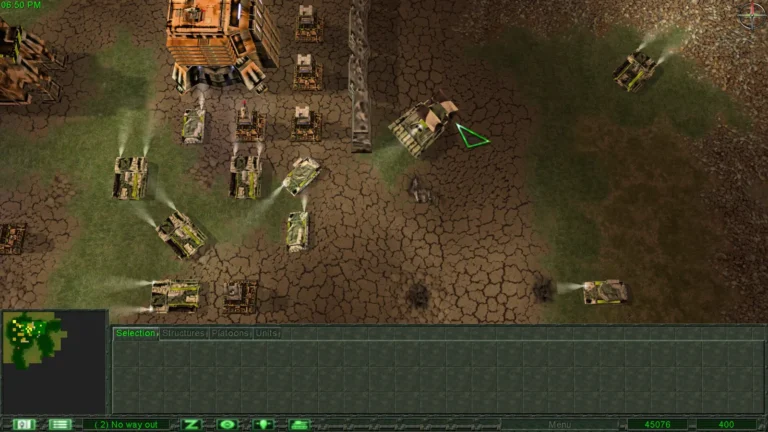 Video games · internal experimentRemaster with local AI An internal experiment to test our tools: terrain, textures and interface of a 1999 strategy game rebuilt with local AI and AI agents. Before and after.
With AI where it helps
In our software, artificial intelligence does specific jobs: it sums up the day, prepares a draft, finds a listing from a request written in plain words, recognises an object from a photo.
The same rule always applies: the AI proposes and a person confirms. Nothing goes out on its own.
How we work
- Analysis: we look at how you work today and where time is lost. The result is a list of what to build and what not to.
- Prototype: a first version you can try, with your own sample data.
- Short releases: the software grows one piece at a time, and each piece is used straight away.
- Handover: code, data and documentation are yours. We stay with you afterwards too, if you want.
Where it runs
On your server, in the cloud or inside your WordPress site: we decide together, depending on who has to use it and how confidential the data is. In every case with automatic backups and role-based access.
Frequently asked questions
How much does custom software cost?
It depends on what it has to do. After the analysis you receive an itemised quote, with a first useful version as the first milestone, so you decide step by step.
How long does it take?
A first usable version usually arrives in a few weeks. After that the software grows in releases, according to priorities.
Who owns the code and the data?
You do. We hand them over together with the documentation.
Does it connect to the programs we already use?
Almost always: ERP, e-commerce, email, calendar. We check during the analysis, before promising.
What if we need something else in a year's time?
The software is built to grow: a piece is added without redoing the rest.