AI lab · Internal experiment
A 1999 game rebuilt with AI that runs on our own computer
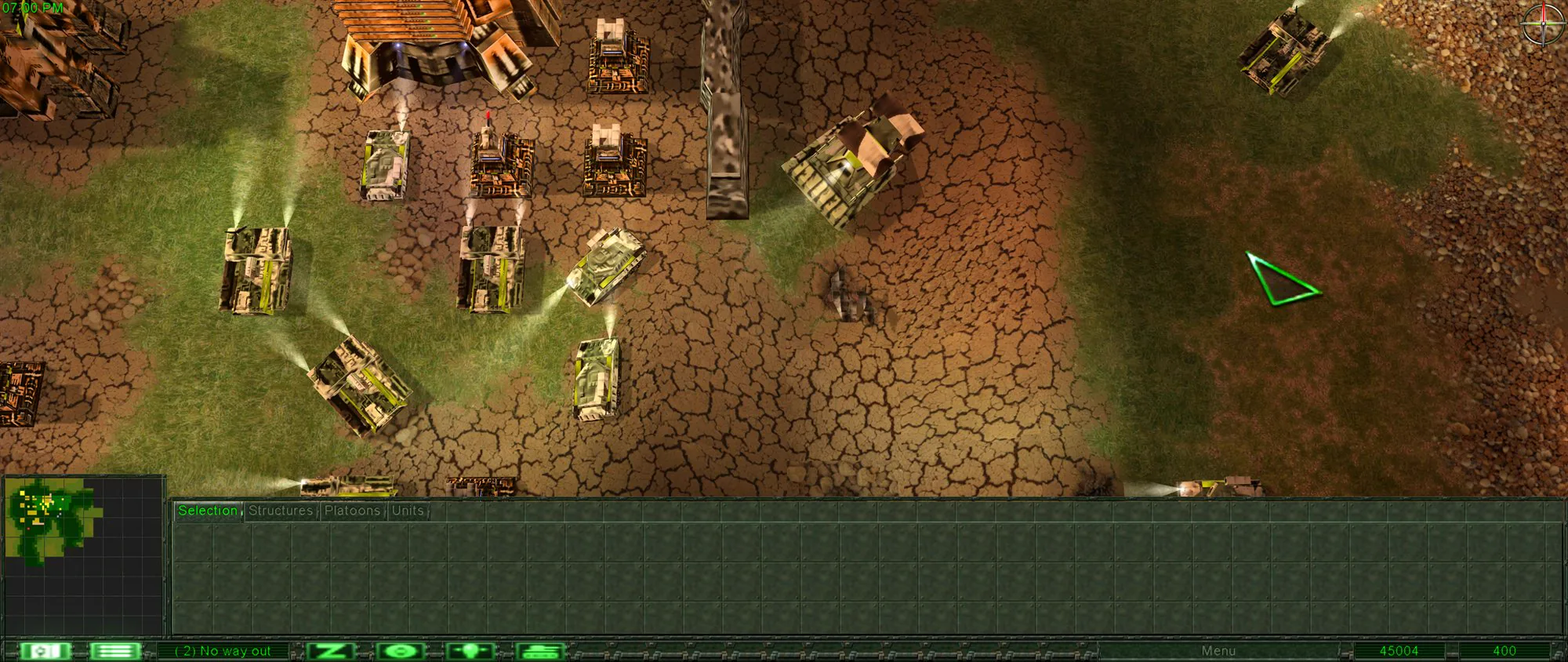
We took Earth 2150, a 3D strategy game from 1999, and rebuilt its terrain, textures, effects and interface. It now runs on Windows 11 at 60 frames per second instead of 30. The models that generate the images ran on an ordinary PC with a gaming graphics card, with no paid generation services. The work was organised and carried out by coordinated AI agents, with a person making the decisions by looking at the game. It is an internal experiment: we ran it to test AI tools and the other software we have built ourselves.
- Industry
- Video games · internal experiment
- Type of work
- Graphics remaster with local AI and autonomous agents
- What it includes
- Terrain, building and unit textures, effects, icons, smooth 60 fps, Windows 11 compatibility, launcher, installer
- Tools
- Stable Diffusion and Real-ESRGAN running locally, AI agents, tools we developed ourselves
- Note
- Unofficial fan project, not distributed. The game and its trademarks belong to their respective owners
Where we started
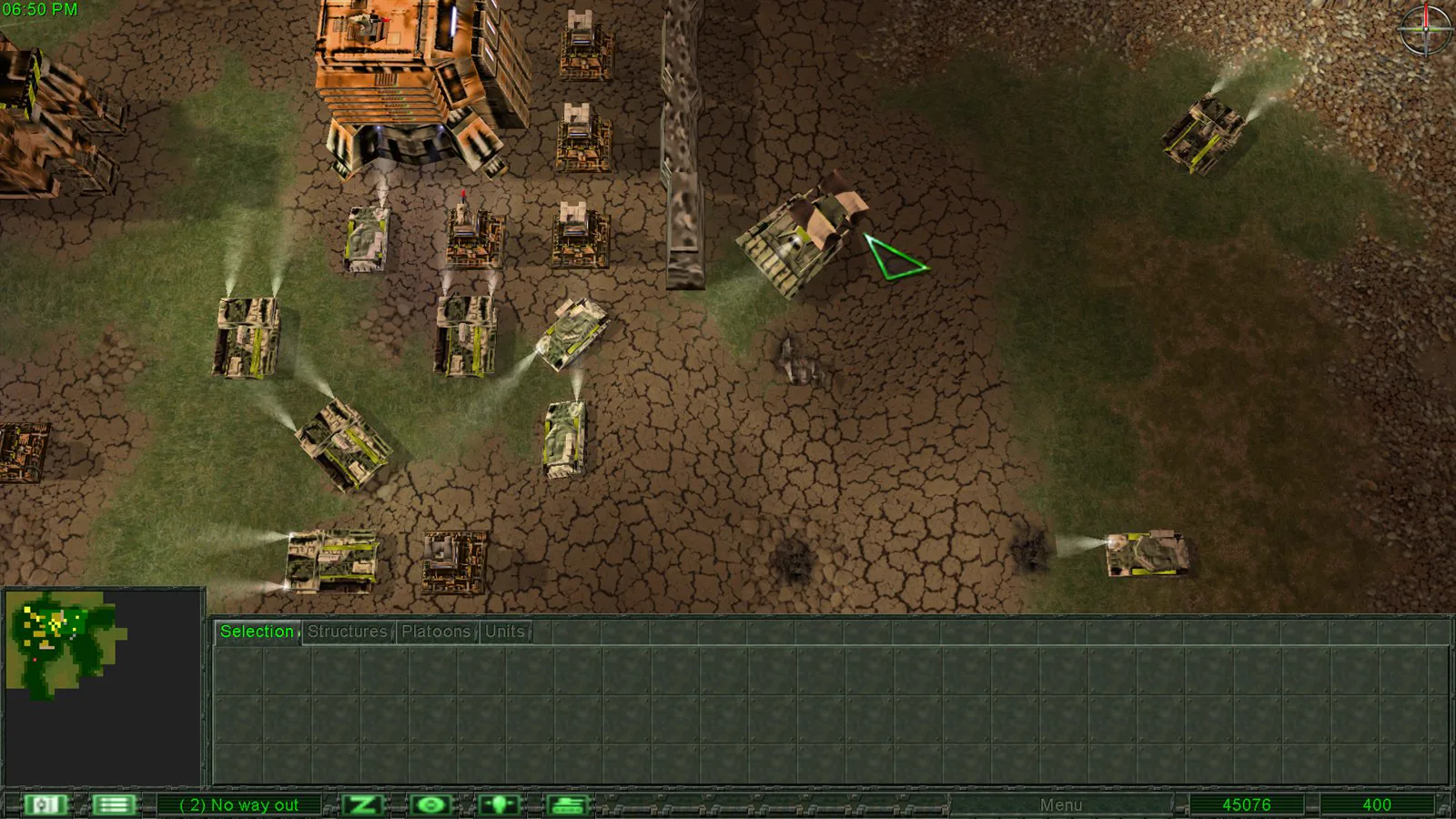
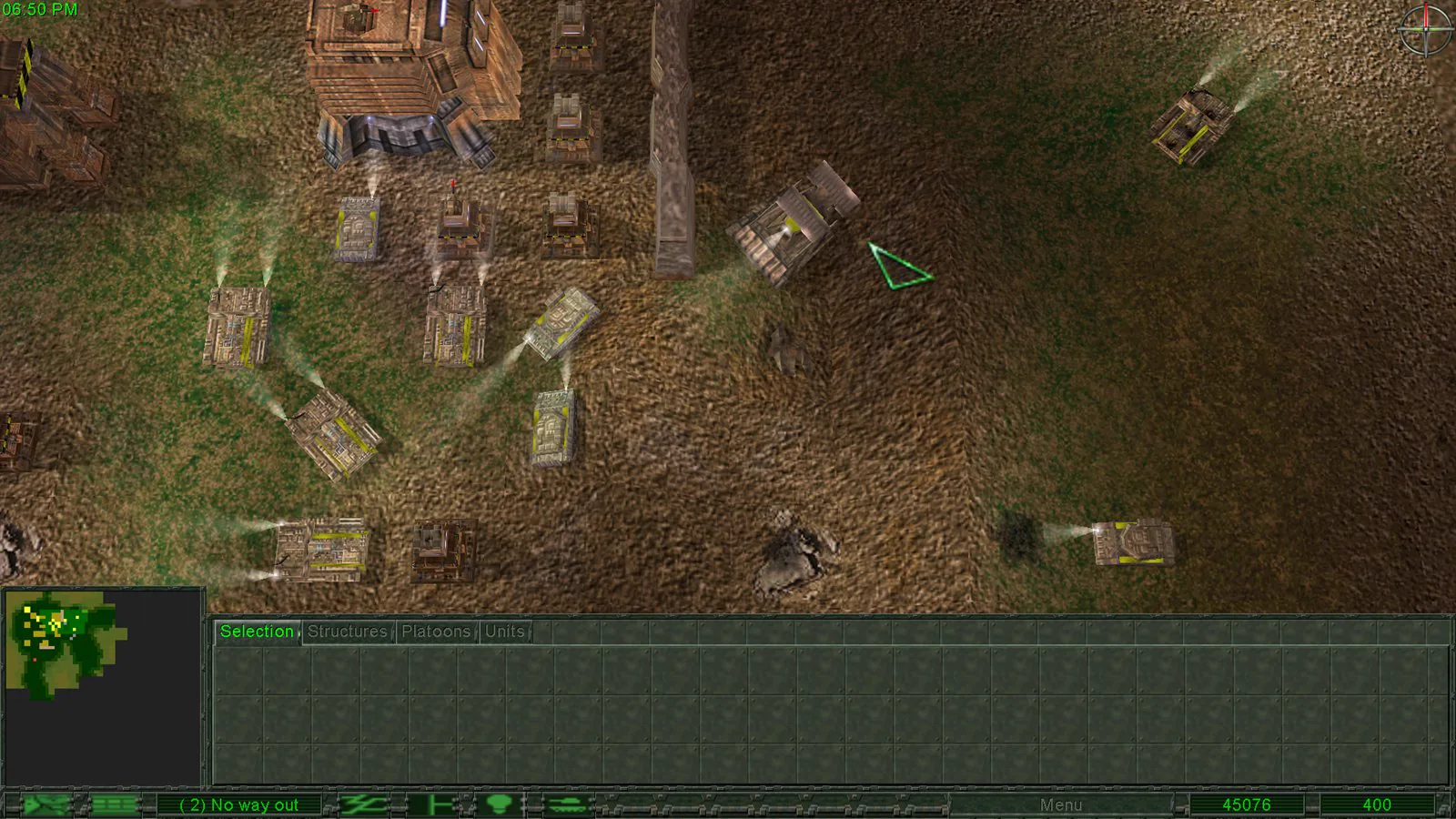
Earth 2150 came out in 1999. Its textures are 128 or 256 pixels wide, and on a modern screen they look like what they are: small, grainy, with hand-painted lighting.
We wanted to test our tools on a real job, long and full of technical constraints, and see how far local AI can go. An old game is a good test: there is no source code, the file formats are undocumented, and every change has to be tested inside the game, not on an image.
We set ourselves three rules: for images, only free models that run locally; no paid software; and the original game is never touched. Every test was done on a copy.
The first attempt did not work
We started with the obvious route: upscale every texture to twice its size with an upscaling model, then repaint it with Stable Diffusion while staying true to the original. Technically it worked. In the game, you could not see any difference.
We measured the reason afterwards: at the distance you play from, one pixel of the original texture already covers about one pixel of the screen. Adding resolution adds nothing on screen. We also tried four times the size: 27 MB more memory for eleven textures and, again, no visible difference.
That changed the method: not enlarging what was there, but rebuilding it.
What we built
- The tools to open the game. The formats of the archives, textures, 3D models and menus were undocumented: we decoded them and wrote programs to read and rewrite them without errors.
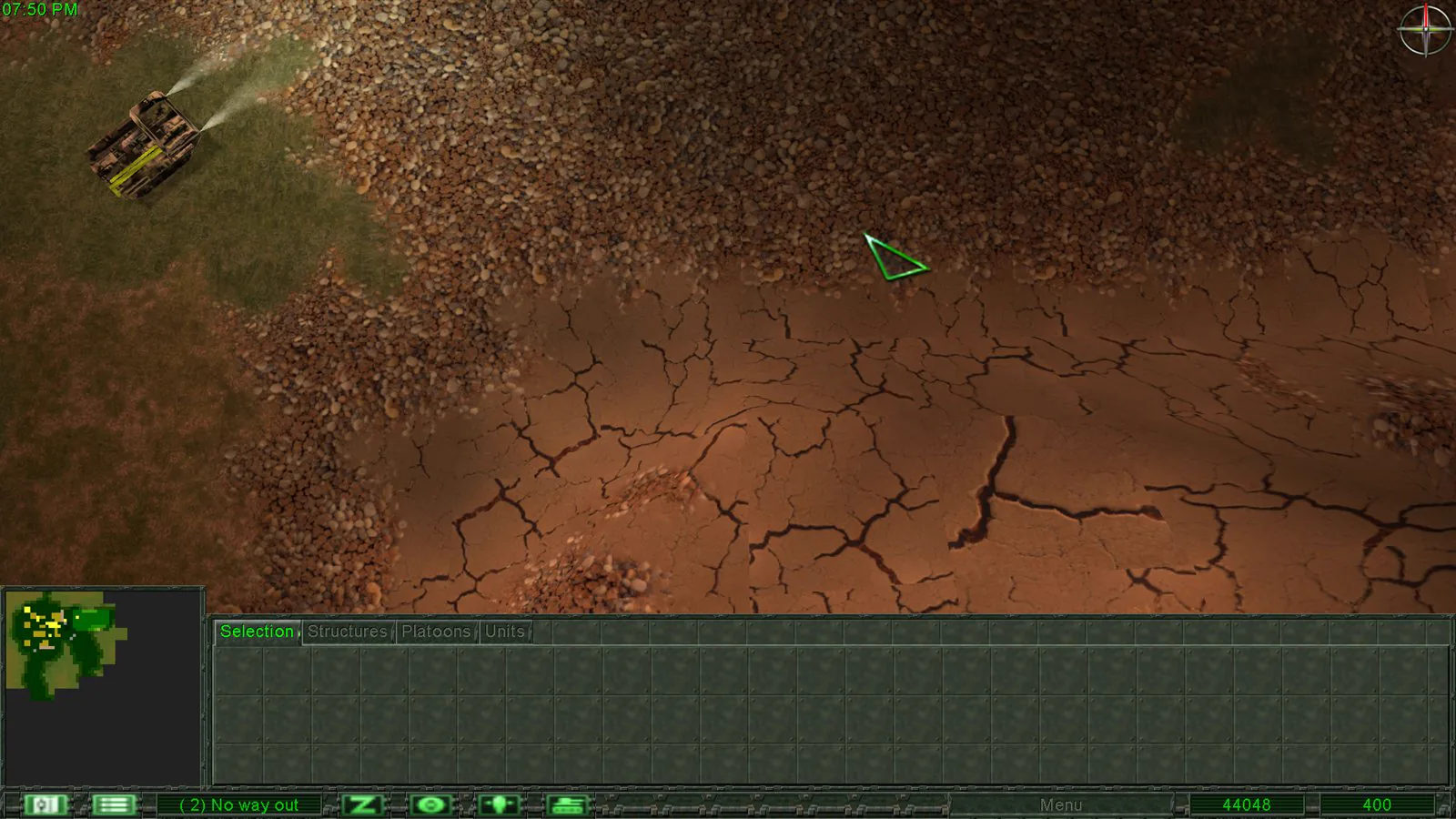
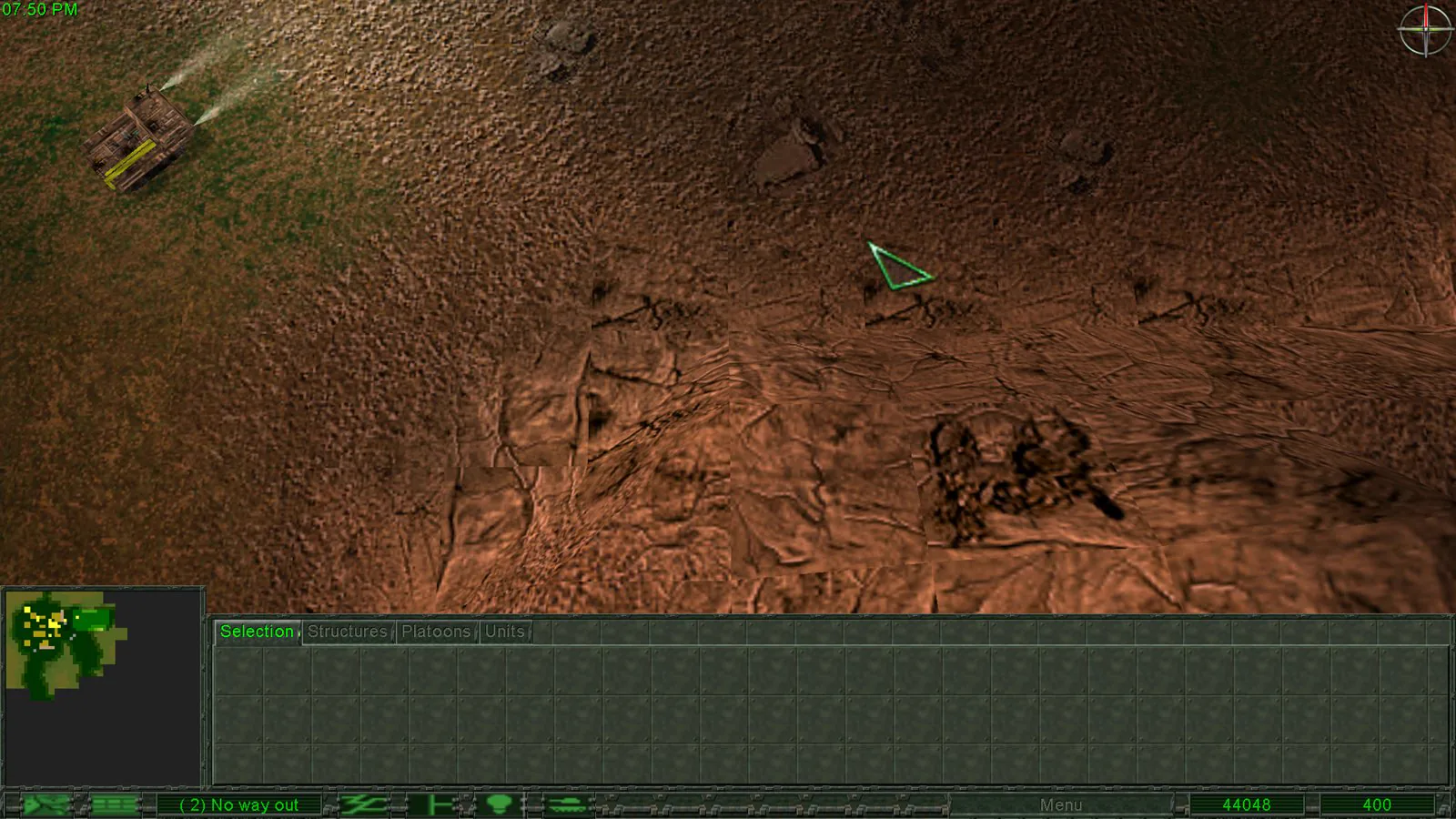
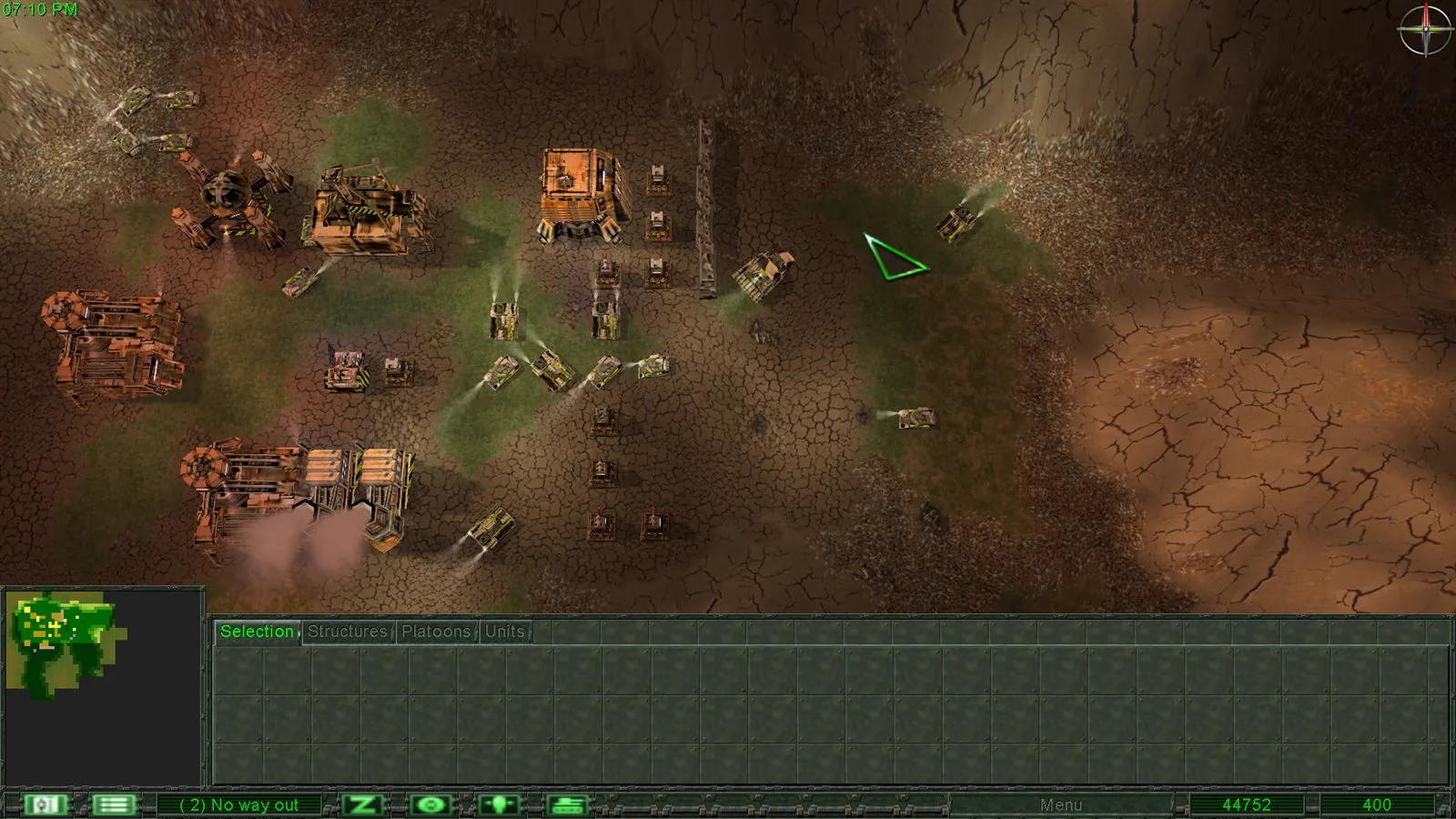
- The terrain, tile by tile. Five of the seven environments plus the sand, rebuilt from scratch: more than 3,000 tiles. The materials (cracked mud, grass, gravel, rock, sand) are generated locally and cleaned of painted lighting, because the game rotates the tiles and every painted shadow became a patch.
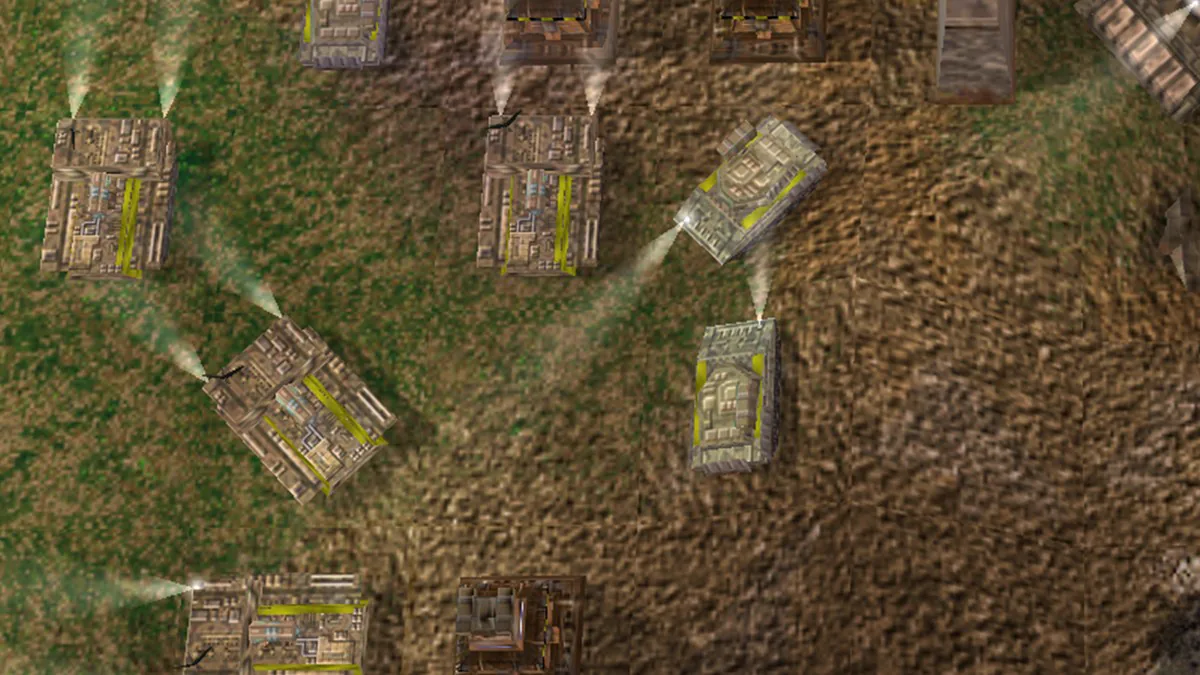
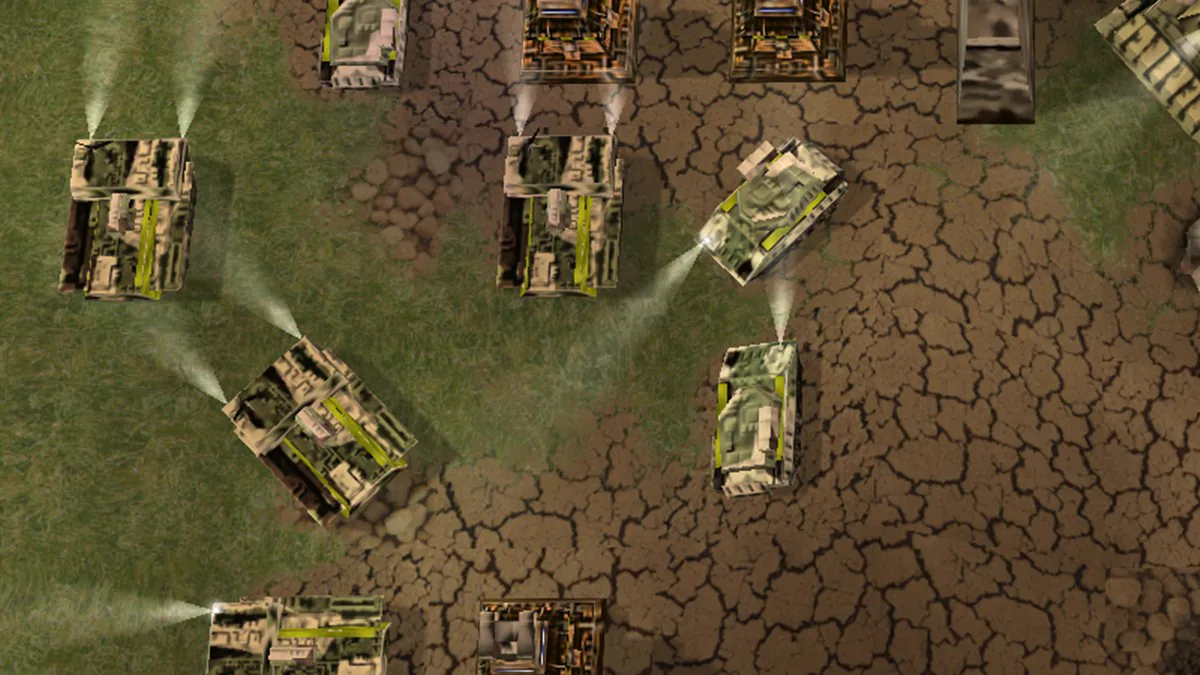
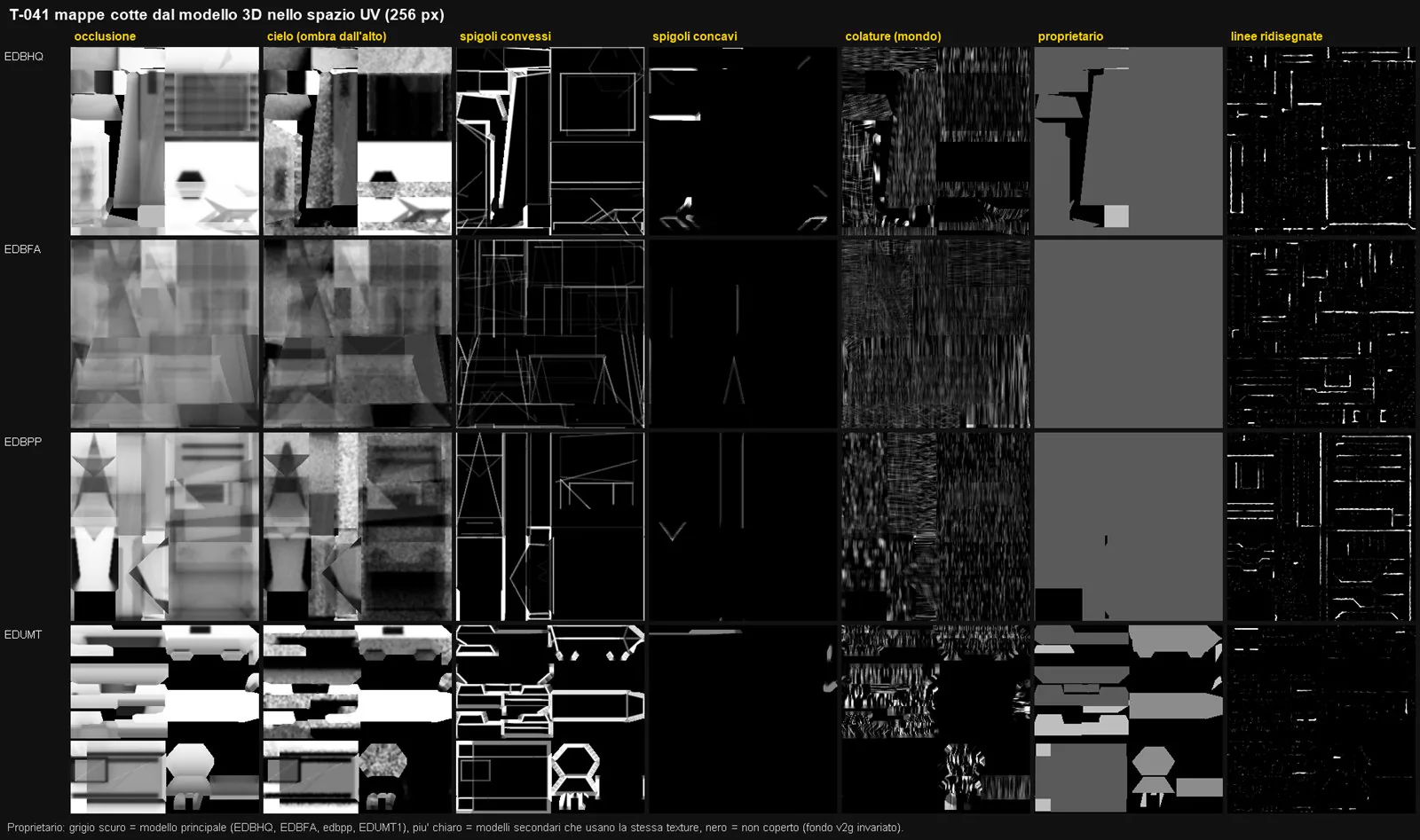
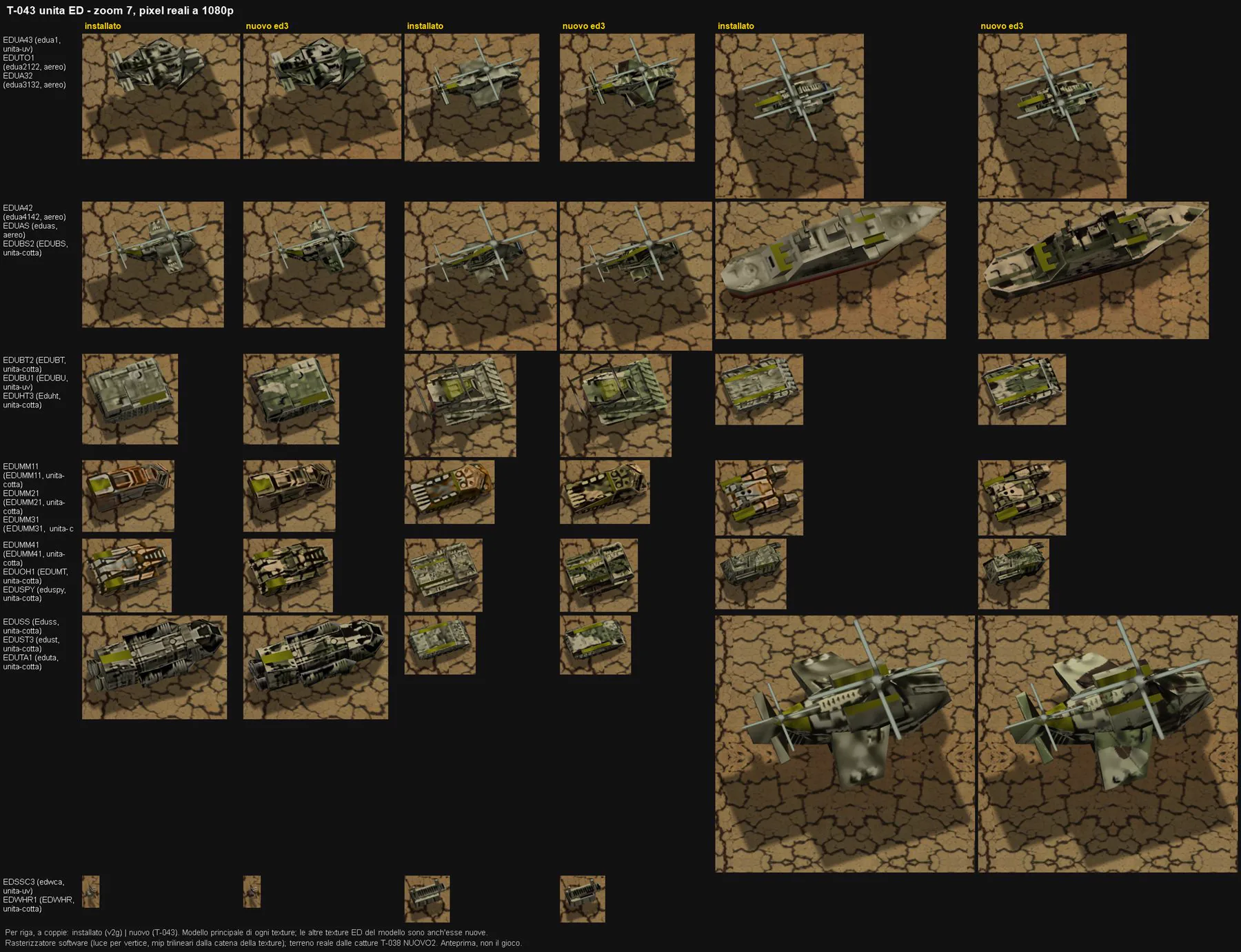
- The textures of the three factions. 143 building and unit textures redone, with shading and wear calculated from the real 3D model: dark in the corners, light on the edges. The tanks have a new camouflage with large patches that makes them stand out from the terrain.
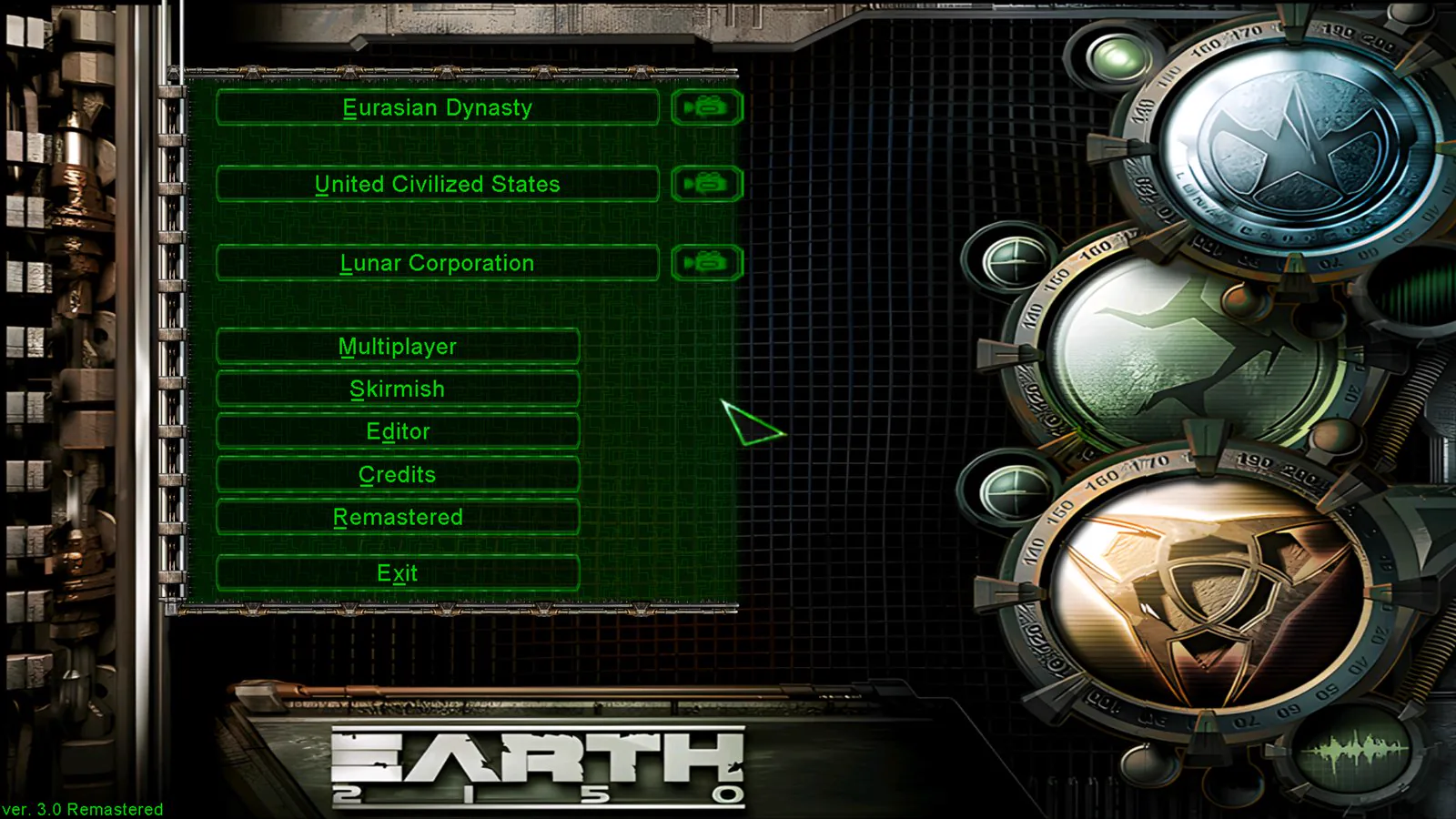
- Effects and interface. Explosions, smoke and lasers at twice the resolution; redrawn command icons; panels fixed for widescreen.
- Smoothness and Windows 11. On a modern PC the original game was not playable. We rewrote part of the code and fixed the bugs: it now runs on Windows 11 at 60 frames per second, compared with 30 in the original.
- A game simulator. A program that draws the 3D models with the new textures the way the game would show them, to catch errors before opening it.
- Automated in-game tests. A script starts the game, loads a saved game, moves the camera, captures the screen at every zoom level, measures memory and quits. More than 1,400 screenshots in three days.
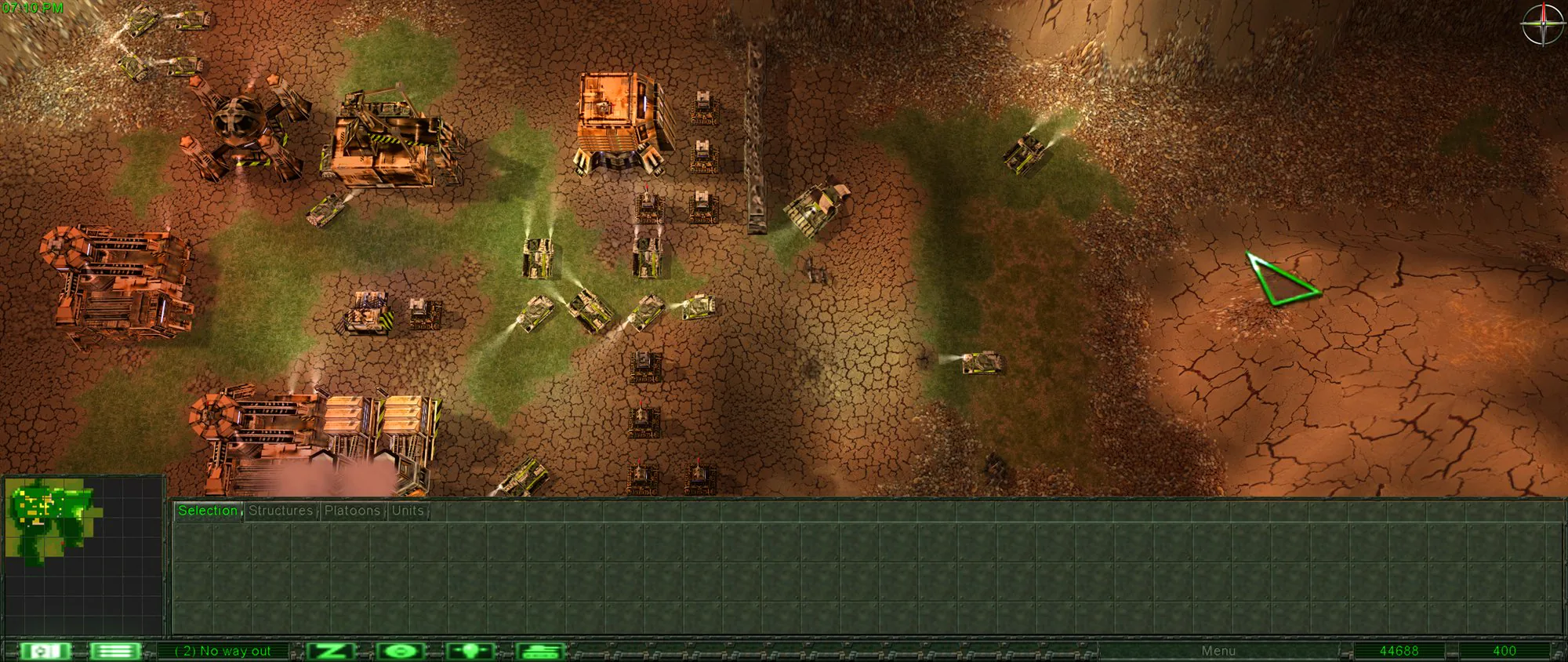
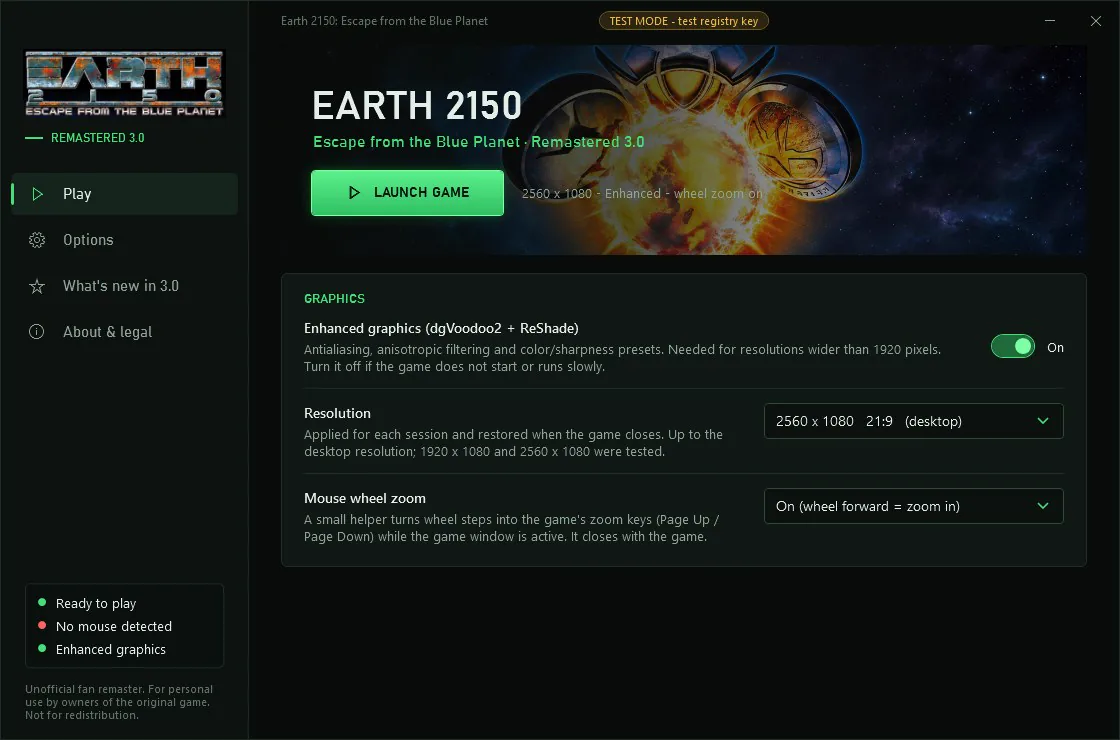
- Launcher and installer. Resolution choice up to 2560×1080, zoom with the mouse wheel, and two installers: the full game and the patch only.
How the AI worked
The work was split between a coordinating agent and executing agents. The coordinator wrote the brief with precise constraints; the executor carried it out alone for one or more hours and delivered files, tests and a report. The coordinator did not trust the summary: it checked the files again, looked at the images and ran the test in the game.
Every decision is written down in a log, separating what was seen in the game, what was verified on the files and what is only a hypothesis. In three days: more than 40 documented briefs, 114 saved versions, 38 series of automated tests.
Safety rules were part of the brief: the original game read-only, every change on a copy, explicit permission before installing or downloading anything. At night the agents worked alone, and in the morning there was a summary of the choices made and why.
The person stepped in where a person is needed: looking at the game and saying “this is good” or “I see no difference”.
What did not work
- Upscaling the textures. Twice and four times the resolution: no visible difference in the game. This is the result that changed the project.
- Snow. Three attempts, three rejections: the image generator running on an 8 GB card cannot make snow seen from above. The original snow stayed.
- The 3D models. Subdividing the polygons or regenerating the models from images gave the same or worse results. The models are still the 1999 ones.
- Full widescreen videos. They looked good, but they froze the game on entering the menu. We removed them.
We tell you about them because in an AI project half the value lies in finding out quickly what does not pay off, with a test and a measurement, and in changing course.
What changes
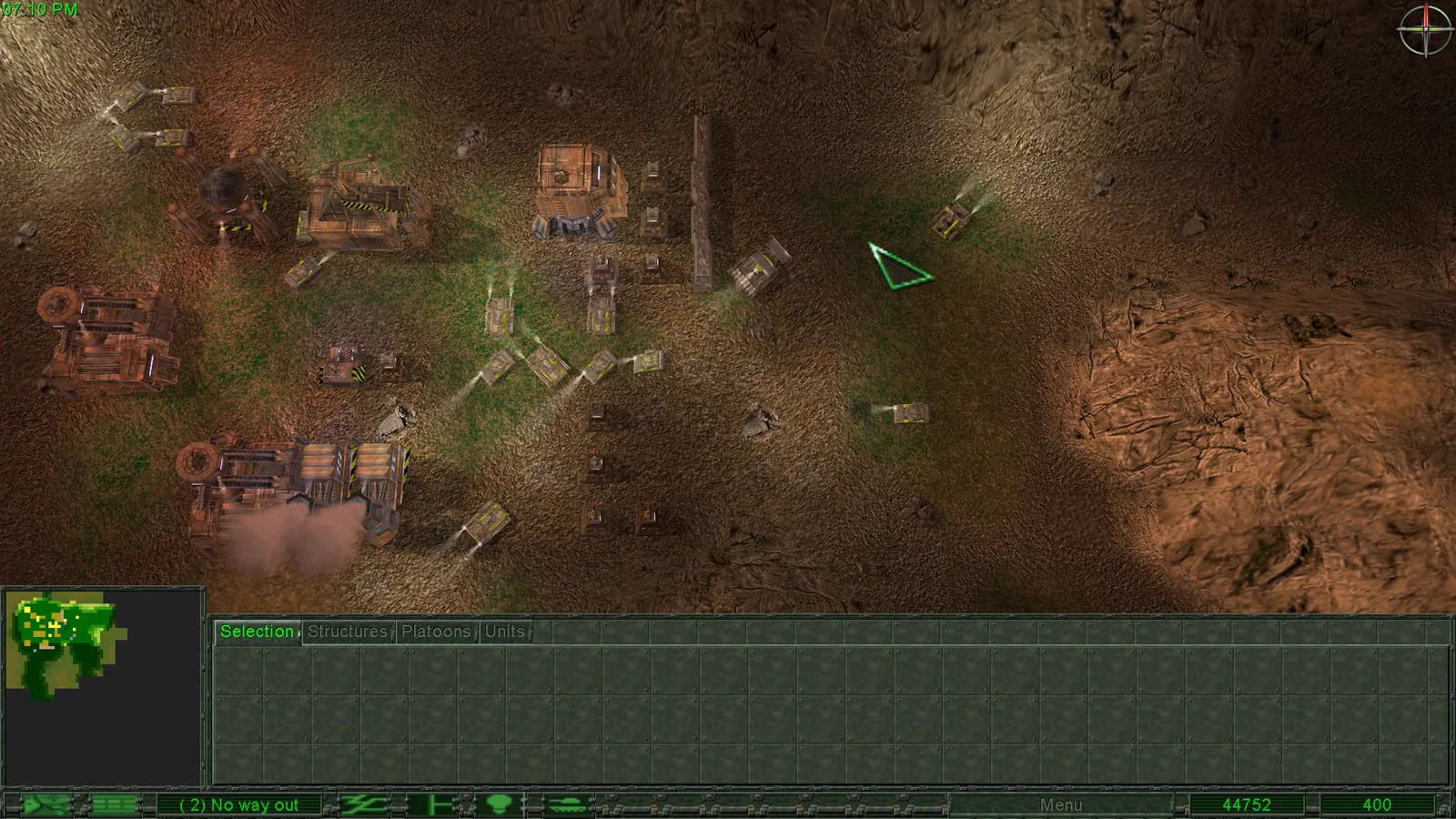
The terrain is the difference you notice first: from crumpled patches to believable mud, grass and gravel, at every distance. Units can be recognised at a glance and the three factions stand apart by colour. The game runs on Windows 11 in widescreen, at 60 frames per second instead of 30, and uses the same memory as before.
For us the result is the method. A long, technical job, with undocumented files and thousands of images, carried out by AI agents with checks at every step, with image generation on an ordinary computer. It is the same way we build software and automation for companies.
In numbers
- 3 days
- from the first file opened to the installer
- 3,000+
- terrain tiles rebuilt
- 143
- building and unit textures redone
- 1,400+
- in-game screenshots taken automatically
- 60 fps
- compared with 30 in the original game
- €0
- to generate the images: everything runs locally
Frequently asked questions
What does “local AI” mean?
It means the AI models for images run on our own computer, not on an online service. There is no cost per generation, and the images produced stay on the machine. For this project a PC with an 8 GB gaming graphics card was enough. The agents that coordinated the work, on the other hand, are an online AI service.
Can the same be done with a company's data?
Yes, and that is why it interests us. Documents, product images, historical archives: when the data must not leave the company, the models can run on a computer or a server in-house.
Did the AI do everything on its own?
No. The agents wrote programs, generated images and ran the tests, sometimes for hours without supervision. But the decisions on what looks good and what to keep were made by a person, looking at the game. And several approaches proposed by the AI were dropped after testing.
Can I download the remastered game?
No. It is an unofficial study project and we do not distribute it: the game and its trademarks belong to their respective owners.
Related service AI solutions and automation
Earth 2150: Escape from the Blue Planet is a game by Reality Pump, published by TopWare Interactive. This is an unofficial fan project, made for study purposes and not distributed. The game images are shown for illustration only.